Renewal of the UN Requires Investment and Democratic Reform

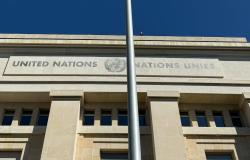
Andreas Bummel argues that reform of the UN requires democratic world governance and that research suggests support for it remains widespread.
At the recent Munich Security Conference, the future of the United Nations became the subject of a brief exchange. EU foreign policy chief Kaja Kallas argued that whenever the world faced major international crises, as it does now, international law evolved in response, implying that this was a moment to renew multilateral cooperation.
U.S. Ambassador to the UN Mike Waltz, appearing on the same panel, stated that everyone agreed reform was necessary. But in his view, this meant that the UN needed to be put “on a diet,” scaled back to basics and stripped of what he portrayed as bureaucratic excess.
In fact, Washington is expected to dramatically reduce its UN contributions. In anticipation, UN chief António Guterres last year launched unprecedented staff reductions and structural changes are under review in the so-called UN80 process. Recently, Guterres warned that the organization nonetheless risks “imminent financial collapse.”
In what observers described as an eyebrow-raising moment, Waltz distributed caps at the panel in Munich bearing the slogan “Make the UN Great Again.”
But the United Nations, arguably, was never “great” to begin with. It emerged in 1945 as a compromise among the Second World War’s victorious powers, including the totalitarian Soviet Union, and was not intended to be a democratic gathering of humanity. The Security Council entrenches great power privilege through its exclusive five permanent members who hold veto powers. The General Assembly gives every member state government a vote, regardless of whether it represents a democracy or a dictatorship. Even in 1945, a review of the UN Charter was anticipated to be held within ten years but that undertaking was quietly dropped.
Waltz is correct that major reform has not occurred in eight decades. But reform that is reduced to austerity will not lead to meaningful, positive changes. Nor does Donald Trump’s newly installed “Board of Peace,” with himself as chairman for life and veto holder over most decisions, represent a credible alternative. If anything, it illustrates how easily international cooperation, steered by an authoritarian who mixes private and state interests, can slide backward into personalized power.
Real reform will actually require investment, not only financial but institutional and political. This is where a different reform trajectory enters the debate. Strengthening the UN and multilateralism more broadly requires strengthening their democratic character and moving beyond a strictly state-centered model.
In an interdependent world, basing international cooperation solely on governments is increasingly untenable. Narrowing the political imagination only deepens cynicism and reinforces the very paralysis government leaders claim to oppose.
One forward-looking and long-standing proposal, ready to be picked up, is the creation of a world parliament, an elected body representing people rather than governments, mandated to address global challenges and advance the global common good. This vision, which could be implemented incrementally in a UN context, has strong popular backing even in times of nationalism, polarization and authoritarian resurgence as a new survey shows.
Conducted in September 2025 across 101 countries representing 90 percent of the world’s population, it was the largest poll on the subject to date. 117,000 respondents were asked online whether they “strongly” or “somewhat” support or oppose “the creation of a citizen-elected World Parliament to handle global issues.” Forty percent globally expressed support, 27 percent were opposed, and 33 percent remained neutral.
Younger people, ethnic minorities, urban residents, and those with lower income and lower education levels tended to be most supportive. Women were less likely than men to oppose the idea and more likely to be neutral. Geographically, support was strongest in the Global South, particularly in Sub-Saharan Africa. Türkiye and Mozambique ranked highest in net support.
Only three of the 30 most supportive countries are rated “free” by Freedom House. Support was significantly higher in politically restricted environments. Relative majorities in favor were recorded in 85 of 101 countries. Opposition outweighed support in just 16 countries, all but one of them high-income democracies. Austria, the United Kingdom, and the United States had the lowest net support globally.
The survey results suggest that those more at the periphery of national or global power are most likely to favor a world parliament. The data suggests that citizens who experience repression, exclusion, or limited opportunity may view such a body as a possible channel for expressing grievances and demanding change. Conversely, respondents in established democracies may be wary that a global parliament could be captured by authoritarian governments.
Some critics argue this is already happening within the UN, where authoritarian regimes use their membership to shield themselves from scrutiny and present a façade of legitimacy. At the UN, each member state has equal formal standing, regardless of its regime type or human rights record. Today, 59 of the UN’s 193 members are considered “not free” and another 50 only “partly free” according to Freedom House’s assessment.
The survey highlights that public opinion on the idea of a world parliament is not firmly settled. Neutral responses dominated in many countries, including the United States. Opposition to a world parliament was lower and less entrenched than might have been expected. This suggests significant room for public debate. Even from a conservative point of view, the idea of creating a democratic oversight body at the UN could be appealing.
A world parliament would shift global deliberation and decision-making beyond governments alone. But it can only succeed if its members were elected through genuinely democratic processes. This may explain the particularly high levels of support from respondents in autocratic states, who may view global democratization as a path to change at home as well.
A practical step in this direction is the creation of a consultative United Nations Parliamentary Assembly, composed initially of national legislators and, over time, potentially directly elected members. A “Second UN Charter,” published in 2024 by an international study group, shows how such a parliamentary body could be incorporated into a reformed UN system.
A new civil society campaign is pushing for a UN Charter review conference under Article 109 of the UN Charter. Advocates argue that waiting for the “perfect moment” for reform means deferring change indefinitely as it may never arrive. Creating an elected UN body should be one of the outcomes of such a review if the UN’s legitimacy and oversight is to be bolstered.
Political scientist Mathias Koenig-Archibugi documented that previous polls as well have shown consistent support for democratic world governance. The results of the latest survey on a world parliament reinforce these findings. As former Greek Prime Minister George Papandreou pointed out, the high level of public support should urge political leaders and experts to consider a global parliamentary body. A UN Parliamentary Assembly, if done right, could be a force to support both, multilateralism and democracy.
Andreas Bummel is Executive Director of Democracy Without Borders which commissioned the recent survey on a world parliament.
Photo by Sayed Masoumi