The Geopolitics Fetish

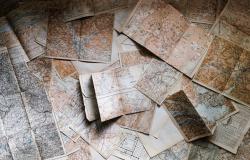
Geography matters. But when maps begin to dictate the conversation about world affairs, Robert Schuett argues, politics loses judgement and with it, moral responsibility.
Shortly before I left for my Fulbright residency at Stanford University’s Center for International Security and Cooperation (CISAC), I had lunch with a friend in Vienna. He told me he had recently been invited several times to speak on current world affairs and sighed that doing international relations used to be more fun than it is now. The world seemed stabler then, less overtly militaristic. And who, he asked half-seriously, really enjoys talking about what many in the general public perceive as unending doom and gloom?
I jokingly replied that he might want to re-read Robert Gilpin’s account of ‘why no one loves a political realist’.
This was before the latest US/Israel-Iran escalation. Still, we had more than enough to discuss, and the mood was already unmistakable. Everything is geopolitics again.
The conversation reminded me of an op-ed I wrote more than three years ago. I cannot even recall with certainty where I sent it — most likely to the Frankfurter Allgemeine Zeitung — but I do remember how it began. With a scene in Cologne. Marcel Reich-Ranicki, the formidable literary critic, was to receive the Deutsche Fernsehpreis (German Television Award) for his life’s work. Instead of politely accepting the award, the then eighty-eight-year-old took the stage and delivered a furious indictment of German television. It was dreadful, he said. And there were cooks everywhere. Cooking shows. Cooking competitions. Cooks, cooks, cooks. He refused the prize: ‘I don't belong here among all this rubbish’.
It was hilarious to watch — but also refreshingly clarifying.
In my rejected op-ed, I replaced cooks with geopolitics. Geopolitics everywhere. Experts everywhere. Maps everywhere. Strategic depth. Buffer zones. Chokepoints. Spheres of influence. Even the European Commission President calling for the EU to become a geopolitical actor, with von der Leyen saying she will lead a ‘geopolitical Commission’.
There is, of course, nothing wrong with geopolitics as such. Geography matters. Anyone who denies that is naïve. Mountains, sea lanes, borders, proximity, all these things shape politics in ways that cannot simply be wished away. Spheres of influence are not a nineteenth-century museum piece.
But there is a difference between acknowledging geography and fetishising it. For when geopolitics becomes the master explanation for everything, something else quietly disappears—politics itself. When Russia’s invasion of Ukraine is reduced to an inevitable reaction to NATO’s eastward expansion; when conflict over Taiwan is framed as a mechanical outcome of ‘Thucydides’s Trap’, or when wars are attributed to immutable civilisational fault lines, human agency dissolves. Political decisions become metaphysical destiny. Moral responsibility migrates from ‘leaders’ to maps.
Hans Morgenthau warned against this. In Politics Among Nations he called geopolitics a pseudo-science when it pretends that geography determines destiny. He spoke of the ‘fallacy of the single factor’. He was right. The idea that geography drives the fate of nations is analytically thin and normatively troubling.
If everything is geopolitics, then nothing is political. Decisions become necessities. Leaders speak as though maps compel them. Strategy becomes mechanical. We begin to talk as if power and economics simply dictate outcomes and as if statesmen merely execute what geography demands. That is not realism. That is determinism dressed up as realism.
True political realism begins with power, yes. But it does not end with it. It recognises constraints without surrendering to them. It accepts tragedy without denying agency. Above all, it insists that leaders remain responsible for their choices.
And yet, a geopolitics fetish does something else. It narrows diplomatic imagination. It reduces foreign policy to managing lines on a map. It drains diplomacy of creativity and moral responsibility. And it encourages publics to believe that hard decisions are simply imposed by the so-called strategic environment.
One hears this language constantly now. The world is harsher. Rivalry has returned. We must adapt. We have no choice. But of course there are always choices. There are always alternatives within constraints. Geography sets the stage, at least partly so, but it does not write the script – indeed, there is no script other than the one we write.
What worries me is not that geopolitics has returned - it never really left. What worries me is the tone of inevitability that accompanies it. As if the revival of great-power politics automatically suspends debate about order, law, and justice; as if speaking about moral purpose were somehow unserious in a so-called geopolitical age.
If geopolitics becomes the only acceptable language of international affairs, we risk something subtler than strategic miscalculation. We risk hollowing out the political dimension of politics. We risk telling ourselves that maps decide, and in doing so, that responsibility lies elsewhere.
That would not make us more realistic. It would merely make us less democratic and less free.
Robert Schuett is a career civil servant (currently on leave), serving as Chair of the Austrian Political Science Association and as the 2025-26 Fulbright-Botstiber Visiting Professor of Austrian-American Studies at Stanford University.
Photo by Andrew Neel