COP’s Waning Star Reveals the Crumbling Certainties of Climate Politics


Les Coleman argues that the drop in G20 leaders' attendance at recent climate COPs reflects a broader collapse in political confidence in the climate narrative. Political drivers shifted after decades of failed predictions, ballooning costs and negligible policy impact fuelled a quiet public revolt.
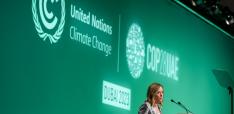
Not long ago, the political elite’s favourite pilgrimage was to the annual COP climate summit as it rolled from one exotic host city to another. G20 leaders queued for photo-ops, and competed to make the most theatrical warnings and grandest promises of cuts in CO2 emissions. This year? The barest majority of just eleven turned up to Brazil’s COP30, and the snub perfectly captures shrinking political enthusiasm for climate orthodoxy.
After three decades of grandstanding and over $10 trillion thrown at decarbonisation, the returns look miserable. How did policy get so far away from reality?
Science played a part because it was never settled nor unequivocal. For instance, the IPCC said in its sixth, most recent Assessment Report (page 28) that it is likely that greenhouse gases have warmed the planet by 1.0-2.0 0 C, where ‘likely’ is 66-100 percent confidence. That is, the UN body appointed to asess the human basis of warming thinks there is up to one chance in three that it is not true. A qualitative pointer to uncertain science is the oft-parodied string of missed predictions of disaster made by prominent spokesmen such as US vice-president Al Gore, various UN secretaries-general, and King Charles. Another is UNESCO’s recent launch of the Orwellian-sounding Global Initiative for Information Integrity on Climate Change. Even the least cynical observer must doubt the credibility of a science that exposes its advocates to ridicule and requires a modern version of the Inquisition to throttle dissent.
But the real culprits in failure of climate policy are economics and psychology, which – not by coincidence – are amongst our weakest fields of knowledge.
Economics of climate change first entered public consciousness in 2006 with a Review by former World Bank Chief Economist Sir Nicholas Stern. He concluded that climate change under business as usual would reduce global GDP by at least five percent, which – by 2050 - equates to an annual slowing in GDP of about 0.1 percent. This was so trivial as to laugh climate policies out of contention, so estimates were quickly ratchetted up. A highly publicised study published last year in Nature projected a loss in global GDP by 2100 of up to 62 percent. However, in further proof of scientific journals’ low bar for acceptance of research supporting climate fears the paper has just been retracted.
Neither science nor economics justified expensive action. Psychology was the final nail after policy went down the route of imposing decarbonisation from the top down. Targets emerged in the form of hard to comprehend slogans such as net-zero and carbon budgets, which provided little consolation as realities hit home. Most obvious have been energy price hikes this decade which forced many countries to introduce subsidies for households such as the $A75 per month credited to my electricity bill by the Australian government. Increasingly intrusive bans have been enacted including the requirement across Europe and much of USA that new cars from 2035 have zero CO2 emissions; and bans in many countries on gas boilers.
Despite massive effort, literally no progress has been made. The 2015 Paris Accord’s aspiration to limit global warming to 1.50 C has been blown out of the water: rather than bend the global temperature curve, warming is accelerating. Decarbonisation failed and fossil-fuels still contribute near 90 per cent of global energy. Opportunists jumped on the surge in government funding and promoted scams as climate finance and virtuous green business models.
Electorates stung by ineffective climate policy and its obvious drawbacks are restless. A 2025 Ipsos poll across 32 countries found overwhelming agreement amongst respondents that their country should do more in the fight against climate change; but two thirds feel they are already sacrificing too much. Targets are good and possibly subsidies and incentives, but voters push back on taxes and sanctions. Complementary evidence is the retreat of support for Green parties.
Instead of revisiting failed strategy, alarmists have begun digging in like cornered tigers. Their rhetoric veered into apocalyptic theatre: talk of an era of global boiling, collapsing ecosystems and permanent emergency. Most scary are proposals for speculative technologies straight from the pages of techno-terror novels especially geoengineering that would tinker with the atmosphere to dim the Sun.
Policy blunders on the scale of global decarbonisation have a long history. Historians like Barbara Tuchman describe how governments pursue disastrous policies despite less risky alternatives, including Trojans recovering the wooden horse and Japan’s attack on Pearl Harbor. A psychological perspective is that societal shocks such as the 2008 global financial crisis and COVID-19 lead governments to over-react with pre-emptive policies even though costs dwarf benefits. Sociologists describe moral panics where public fear and state action spiral far beyond the actual threat.
Underpinning each policy catastrophe is decisionmakers’ unreal world view. They can display wooden-headedness that relies on a desired outcome rather than facts at hand; be over-confident in their ability to succeed; and count on personal benefits. They might have Malthusian fears over limits from Earth’s finite resources; and often evidence the Kantian philosophy that doing good must hurt. Many welcome constraints on industry and consumption which appeal to ugly traditions that the world has too many people and that the less socially advantaged need firm guidance. Climate politics fits the pattern uncomfortably well.
The insipid outcome of COP30 shows how far the political calculus has flipped after democracies’ accountability made associating with yet another climate jamboree too risky. Perennially gullible electorates should despair at being bogged down in yet another disaster of governments’ own making.
Les Coleman is an honorary fellow at the University of Melbourne. He worked for 28 years with resources, distribution and finance companies in Australia, Fiji, USA and Zambia, and then spent 19 years as a finance academic. His latest book is Research in Crisis (Routledge, London, 2021).
Photo by Beta Xalfa