The Future of the International Stabilisation Force in Gaza?

Based on the experience of 75 years of UN peacekeeping and 30 years of NATO stabilization operations, a few critical factors influence whether states, are willing to politically endorse, financially support, and participate in such missions. These are: legitimacy and credibility, political primacy and mission clarity, perceived impartiality and the consent of the parties to the conflict and the perception of the local population. The International Stabilization Force (ISF), which is a core pillar of the Comprehensive Plan to end the Gaza Conflict, does not currently meet the minimum requirements for most of these factors. This explains why it is struggling to be established. Without significant improvements across these factors, it is unlikely that it will ever be established.
UN Security Council Resolution 2803 authorized the ISF on 17 November 2025. This provides it with formal legitimacy based on established international law and practice. Yet this legitimacy is weakened by the resolution’s lack of clarity on the political objective of the operations and the means to achieve it. A core lesson from the history of peace and stabilization operations is that such operations cannot use force to achieve on the ground what could not be agreed politically around the negotiation table. Peace operations is not a substitute for political agreements; it is a tool for implementing agreements.
The implication for the ISF is that it is unrealistic to expect it to forcibly disarm and demilitarize Gaza, but it can provide a secure and stable environment and facilitate and supervise the process, if Israel and Hamas agree to demilitarize Gaza voluntary.
Use of Force
UNSC 2083 provides for the ISF ‘to use all necessary measures to carry out its mandate’, which is a formulation broadly consistent with the language the Security Council usually use to authorize the use of force. However, another phrase that is typically used to signal the legal basis for the use of force, ‘acting under Chapter VII of the UN Charter’, has been omitted. The intent is presumably to tone down the perception that the ISF is an enforcement operation while authorizing the use force if needed to contain fighting and criminality in Gaza.
While this ambiguity may be operationally useful, it lacks the clarity that both troop contributors and other stakeholders need to make judgements about the operational viability of the mission. Israel has been unable to defeat and disarm Hamas and other armed factions despite using overwhelming force for two years. There is no realistic scenario under which the ISF will succeed where Israel failed. A peace enforcement posture is thus likely to be ineffective but will produce casualties among the troop contributors and the civilian population.
This poses an unacceptable risk for potential contributors. It is important to clarify under what circumstances the ISF will use force. Most potential contributors will be comfortable with using force to protect civilians and in self-defence, but not to forcefully disarm Hamas and other factions.
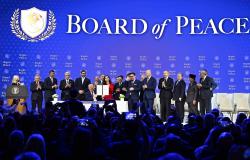
Another important concern is who has the authority to make and change the rules governing the use of force of the ISF within the parameters approved by the Security Council. According to UNSC 2803 it is the Board of Peace, but there is not enough information available yet about how the Board will make such decisions to enable potential troop contributing countries to entrust the Board with making impartial decisions regarding how its soldiers should use force. Potential troop contributors who are also members of the Board, and who will thus have a say in the process, are likely to have more confidence in the Board than those that are not. In fact, it is probably unlikely that a country who is not a member of the Board will consider contributing troops to the ISF.
Consent
Both Hamas and PIJ—the two largest armed factions in Gaza—have explicitly stated that any party attempting to disarm them with force will transform from a neutral party to belligerent. Hamas and the other armed factions reject any unilateral disarmament of the movement disconnected from an Israeli withdrawal from the Gaza Strip in the short-term, and Palestinian statehood in the long-term.
This is, to some extent, in line with Palestinian popular sentiment (October 2025), as 69% of Palestinians oppose Hamas disarmament (78% West Bank, 55% Gaza) and remain divided on the peace plan itself (47% support vs. 49% opposition), with stark regional differences (59% Gazan vs. 39% West Bank support).
The Israelis remain ambivalent. The Netanyahu government supports the ISF demilitarizing Gaza, but not at the expense of the IDF’s operational freedom to intervene should Hamas resist disarmament. The Israeli government thus maintain the right to intervene should demilitarization falter and if Hamas’ start to re-arm.
Essentially, while Hamas will reject the ISF if its mandate extends beyond peacekeeping’s principles of consent, impartiality and the minimum use of force, the ISF serves no purpose for Israel unless it can enforce the demilitarisation of the Gaza strip. If it cannot, then Israel would prefer a situation where it can use force in the Gaza strip without being hindered by the presence of an international force. Israeli public opinion (November 2025) is less divided on the ISF, with 62% supporting the deployment of an international force to stabilize security (52% prefer a US-only or a Western-only force), while 26% insist security should remain under exclusive Israeli military control.
End-state and exit-strategy
The Gaza Peace Plan lacks clarity about its aspired end-state. The peace plan suggests that the role of the ISF will end when the Palestinian Authority is in full control of Gaza, including its security. For that to be achieved the Israeli occupation has to end and Israel has to leave Gaza. Moreover, the end-state in the Peace Plan is not the establishment of a Palestinian state but creating the necessary conditions for ‘a credible pathway to Palestinian self-determination and statehood’.
The Netanyahu government is in principle opposed to the establishment of a Palestinian state west of the Jordan river. This is not a fringe position in Israeli society as 79% of Jewish Israelis (November 2025) oppose the establishment of any Palestinian state along the 1967 borders. The statehood issue thus remains a point of fundamental disagreement that undermines the overall viability of the Gaza peace plan. Without a clear political end-state the ISF lacks an exit-strategy, and risks becoming a proxy occupation force.
Prospects for the establishment of the ISF
Although the ISF enjoys formal legitimacy, its political objectives and mission parameters lack sufficient clarity. As a result, it has failed to achieve consent from both Israel and Hamas, and none of the potential contributors has committed any troops yet. For now, most international stakeholders seem to have taken a wait and see position. There would need to be further clarity about the posture of the mission, the rules governing the use of force, and the Board of Peace, before countries will be able to make an informed decision about supporting and contributing to the ISF.
Cedric de Coning is a research professor with knowledge on peace and stability operations. Erik Skare is a senior research fellow with expertise on Hamas, jihadism and Palestinian politics. Both are with the Norwegian Institute of International Affairs.