Indonesia’s Halmahera Is More Than a Nickel Frontier — Gulf Investors Should Look There with Care

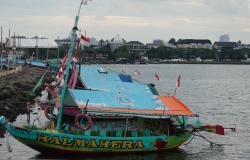
Muhammad Zulfikar Rakhmat argues that Halmahera’s future should not be defined by nickel alone, and that Gulf investors have an opportunity — and a responsibility — to pursue development that balances strategic minerals with social and environmental sustainability.
As the world grapples with the imperative to electrify transport and curtail carbon emissions, the minerals beneath far-flung landscapes have suddenly become strategic. Halmahera, the largest island in Indonesia’s sprawling North Maluku province, looms large on the map of critical metals: its nickel resources feed global supply chains for electric-vehicle batteries and other low-carbon technologies. Indonesia now ranks among the world’s leading nickel producers, and industrial parks there — including the massive Weda Bay Industrial Park — are being developed with significant foreign capital, much of it linked to Chinese investors.
But Halmahera’s story is not one-dimensional. To view it solely through the prism of nickel is to overlook both the social and environmental toll of current industrial activity and the rich, diversified economic foundations that have sustained its communities for generations. That duality is important for investors everywhere, especially Gulf sovereign wealth funds and private capital looking to deploy resources into strategic, long-term growth sectors.
The downsides of heavy extractive investment in Halmahera are real and documented. Research and local testimony describe how nickel mining and smelting operations have fundamentally altered landscapes, weakened traditional livelihoods and strained local environments. Communities near industrial zones have reported loss of farmland and coastal resources as forests and mangroves were cleared. Farmers have sold their land under pressure, and local fisheries have been disrupted by water pollution and changing sea conditions, forcing fishers to travel farther from shore.
Independent monitoring and community advocates also note rising health concerns linked to dust and industrial emissions, degraded drinking water sources and increasing cases of respiratory and waterborne illness in villages near processing hubs. Residents describe threats to customary ways of life and struggles to access equitable compensation for losses.
These impacts are not unique to China-linked capital — resource projects around the world show similar patterns — but the experience in Halmahera illustrates a broader truth: strategic minerals matter, but so do the people and ecosystems that bear the costs of extraction.
Yet beneath and alongside the nickel deposits lies an economy that long predates heavy industry and still offers real potential if supported and modernized. North Maluku’s agricultural sector — including coconut, nutmeg, cloves, cocoa and rice farming — remains a pillar of local life and identity. Coconut and copra production, in particular, sustains thousands of households, and recent initiatives aim to develop downstream processing to capture higher market value on-island and in export markets, rather than exporting raw commodities alone.
Nutmeg and cloves, once the reason European traders first ventured into the “Spice Islands,” still carry high global value. Indonesia’s government has pledged billions in support of downstreaming plantation commodities, aiming to position North Maluku as a world spice hub by investing in infrastructure, processing and market linkages for these commodities.
Rice farming and fisheries, too, remain central to Halmahera’s economy and food security. Data from provincial authorities show substantial underlying agricultural and marine resources — rice fields that can be revitalized and coastal waters rich with fish stocks historically crucial to local diets and incomes.
For Gulf investors aiming to diversify portfolios into critical minerals and sustainable industries, this combination — mineral wealth, agricultural heritage, fisheries and the potential for value-added processing — is compelling. But the lessons from nickel’s social and environmental effects must shape how investment is conceived.
First, capital should not reproduce an extractive pattern in which environmental safeguards and community voices are afterthoughts. Instead, investors should align with global best practices on environmental and social governance, ensuring that projects protect ecosystems and respond to local needs.
Second, investment strategies ought to go beyond raw extraction. Supporting agricultural downstreaming — for coconut products, spices and cocoa — can generate value closer to source communities, creating jobs and stable income streams that are not subject to volatile commodity markets.
Third, developing fisheries sustainably and integrating Halmahera’s coastal economies into global seafood markets can diversify incomes while preserving marine life. This would link Halmahera to growing global demand for responsibly caught seafood without compromising the ecological functions that underpin fishing.
These are long-term bets: they require patience, partnership with local stakeholders, and an understanding that sustainable development is not measured only in tons of ore extracted. They also serve broader global policy goals — food security, climate resilience and equitable growth — which resonate far beyond Indonesia’s shores.
Halmahera does not have to remain a cautionary tale about the social costs of industrial ambition. For Gulf investors willing to bring patience, higher standards and a broader view of value, the island could instead become a case study in how strategic capital helps build inclusive, resilient economies in the 21st century — shaped not only by what lies beneath the ground, but by what can grow on it and thrive along its shores.
Muhammad Zulfikar Rakhmat is the Director of the China–Indonesia and MENA–Indonesia Desks at CELIOS.
Photo by hartono subagio