Amid World Powers: Africa's Leverage in a Shifting Global Order

Titilope Ajeboriogbon argues that Africa’s critical minerals give it new leverage in a shifting multipolar world and examines whether the continent can turn that advantage into real economic and strategic power rather than repeat past patterns of extraction.
There's something almost poetic about the first G20 summit on African soil, held in Johannesburg this past November. Not poetic in a romantic sense, but in the way history occasionally reveals its patterns. The British Empire once carved this continent into zones of extraction. Today, different powers encircle the same resources, but different hands are rewriting the story.
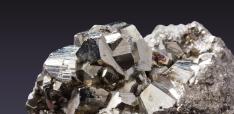
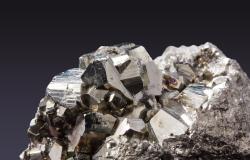
Africa holds almost 30% of the world's vital minerals, including 70% of cobalt and 80% of platinum. This isn't just about numbers; it’s about gaining leverage as the world competes to build electric cars, artificial intelligence data centers, and renewable energy infrastructure. The ancient Greek philosopher Archimedes supposedly said, “Give me a lever long enough and a fulcrum on which to place it, and I shall move the world.” Africa is discovering that its geology might be exactly such a lever.
But here's where philosophy meets pragmatism. Having leverage and using it effectively are entirely different propositions. Over the past decades, the value Africa has derived from technologies that rely on its own natural resources has been less than 5% of the total value created by those technologies. Raw cobalt is leaving Africa in bulk, bound for China and Belgium. Large quantities of raw lithium are also exported to refining facilities located thousands of miles away from Africa. This trend mirrors that of diamonds, gold, and copper during the days of colonization, but has now shifted from a “conquest” relationship to one of “partnership.”
What makes this moment different is that African leaders are strategically leveraging competition between multiple global powers to negotiate better terms. The US's Inflation Reduction Act, China’s Belt and Road infrastructure, and the EU's Critical Raw Materials Act are setting the stage for a new era of competition among great powers. Unlike during the Cold War — when Africa was forced to choose between Washington and Moscow — today, the continent has many new options. With many global players asserting themselves, African countries now have greater bargaining power than ever before.
The African Union's permanent membership in the G20 is much more than just a symbolic representation; it establishes institutional continuity that will carry on after South Africa ends its G20 presidency. This architectural detail, easy to overlook, ensures that continental interests persist beyond individual nations' hosting rotations.
Consider the philosophical problem at the heart of resource politics. John Locke argued that mixing one's labor with natural resources creates property rights. So, what happens where there is an entire supply chain in which one group supplies the raw product, another supplies the technology and capital for production, and a third group builds each product? Who takes home the profits? For years now, Africa has supplied the first piece but has allowed others to take all of the profit from the second and third parts. The Africa Green Minerals Strategy, endorsed by the African Union in 2025, aims to change this calculus by promoting local processing, known as beneficiation.
The numbers tell a stark story. Between 2023 and 2024, Africa exported close to $250 billion worth of critical minerals, with $1.6 trillion expected over the next 25 years. Meanwhile, 600 million Africans lack reliable electricity. This isn't just an economic inefficiency; it's a moral paradox. The minerals power the world's data centers while the children study by candlelight.
But there is a downside, just as there always is, to having this newfound leverage. The resource curse—the paradox in which natural wealth leads to conflict, corruption, and slow economic development—is still very much part of Africa’s reality. Different countries serve as cautionary tales: Venezuela's oil, Nigeria's resource wealth, and the Democratic Republic of Congo's vast mineral resources. Having resources without good governance means these countries are likely to become liabilities rather than assets.
If that is the case, how can African nations make the most of their newfound leverage? Current dynamics indicate that two distinct policy paths could emerge:
First, establish an organized continental strategy for the most significant minerals across the entire continent. The G20 Critical Minerals Framework (G20-CMF) adopted under South Africa's presidency demonstrates how this can be accomplished, but there must also be rules for its implementation. African States should develop binding obligations with respect to minimum requirements for local processing of critical minerals, technology transfer, and revenue disclosures. The African Continental Free Trade Area (AfCFTA) serves as the foundation for building these capabilities.
Second, link access to minerals to infrastructure development. When negotiating with foreign governments or tech companies, the agreement should be clear: if we provide you with cobalt, you will build AI data centers in our country. If we supply you with lithium, you will invest in our energy infrastructure. This is not extortion; it is a reciprocal arrangement. The technology sector itself recognizes that dependence on unfair practices damages brand reputation, as the clothing industry learned with Bangladeshi sweatshops.
The Stoic philosopher Marcus Aurelius wrote, “External things are not the problem. It's your assessment of them. And that you can erase, now.” Africa's mineral wealth is an external thing. The assessment, whether it becomes a blessing or curse, depends on the institutions, governance, and strategic clarity applied to it.
By 2050, Africa's population will reach 2.5 billion, a quarter of humanity. The demographic explosion creates urgency. This generation of African leaders won't get another chance to rewrite the rules of resource extraction. The global order is fragmenting. Traditional alliances are weakening. New powers are rising. In this contested space, Africa isn't just a prize to be won. It's becoming a player with cards to deal.
The question isn't whether the world needs Africa's minerals. Everyone knows it does. The real question is whether Africa will capture the value those minerals create or simply repeat the patterns of previous centuries under different branding. The first G20 on African soil suggested one answer. The next decade will reveal if that answer sticks.
Titilope Ajeboriogbon is a PhD student in Germanic Studies at the University of Illinois, Chicago, and is concurrently pursuing a second master’s degree online in International Relations, Security, and Strategy.
Photo by Pixabay